Hydroponic planning checks for UAE greenhouses
Start with water quality, crop stage, climate and system fit
Use Hydroponic Planner Pro as a structured planning check before changing a nutrient recipe or crop schedule. Begin with measured source-water EC, pH, alkalinity, reservoir temperature, air temperature, humidity, airflow and crop stage. Then compare the selected system, crop spacing, irrigation frequency, VPD, expected water demand and operating cost before making a change. If roots are warm, dissolved oxygen is low, pH is drifting, or plants are heat stressed, correct those limits before increasing nutrient strength. Keep notes on crop response, harvest target, shade or ventilation changes and weekly water use so each planner result stays tied to real UAE greenhouse conditions.

Hydroponic planner checks before changing nutrients
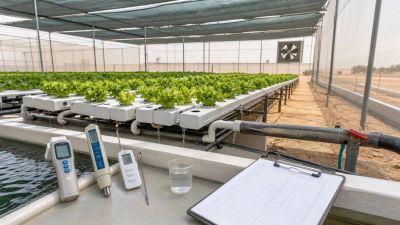
Water-test baseline
Record source-water EC, pH, alkalinity, reservoir temperature and daily top-up volume before changing a nutrient plan. High starting EC or drifting pH can make a normal recipe behave like a stronger one.
Crop and stage
Match the planner assumptions to crop age, spacing, root health, leaf temperature and harvest target. Young plants, heat-stressed lettuce and fruiting crops should not be compared as if they have the same water or nutrient demand.
System limits
Check pump flow, emitter uniformity, channel slope, oxygen, filtration and reservoir size before blaming the recipe. A blocked line, warm reservoir or undersized tank can cause the same symptoms as a nutrient mistake.
Climate and VPD
Use shade, ventilation, cooling and humidity readings with the planner result. In UAE heat, water demand and root-zone temperature can change faster than the nutrient calculation.
Change log
Write down the date, crop, reading, adjustment and plant response after each change. Small recorded adjustments are safer than large recipe jumps.
Stop conditions
If leaves wilt, roots brown, pH moves sharply or EC rises while water drops, stop increasing nutrients and correct heat, oxygen, irrigation timing or water quality first.