Hydroponic control checks for UAE systems
Check water, climate, roots and operations before changing recipes
Use measured source water, EC, pH, reservoir temperature, airflow, humidity and crop observations before changing nutrient strength. Start with foundation checks: confirm salinity and alkalinity, keep EC and pH records, protect dissolved oxygen, clean reservoirs and channels, and separate heat stress from root disease. Then review climate range, shade, ventilation, sanitation, crop stage and recent irrigation changes before adjusting recipes or crop timing.

Hot-climate hydroponic checks
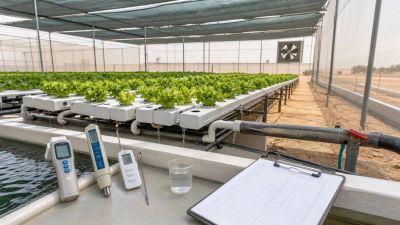
Warm nutrient solution
Warm reservoirs reduce the oxygen margin and can make root problems look like nutrient deficiency. Track water temperature beside EC and pH before increasing fertilizer strength.
Salinity load
Source-water EC, sodium, chloride, bicarbonate and alkalinity can push the root zone away from the intended recipe. Test the water before blaming the fertilizer blend.
Airflow and humidity
Low airflow, high humidity and weak transpiration can affect calcium movement and disease risk. Read VPD as a planning range tied to crop stage.
Tipburn and soft growth
For leafy greens, compare root-zone temperature, calcium transport, growth speed, humidity, light and airflow before assuming one nutrient is missing.
Pest overlap
Thrips, mites, whitefly and mildew can overlap with nutrient symptoms. Keep pest scouting records next to water and climate records.
Useful weekly log
Record EC, pH, source-water EC, reservoir temperature, air temperature, humidity, irrigation volume, drain observations, pest counts and harvest grade.