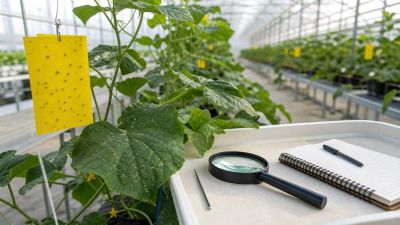
IPM checks before choosing a spray
Confirm the pest, pressure and plant stress
Use sticky cards and leaf checks to separate whitefly, thrips, mites, mildew and heat or irrigation stress. Look at young growth, flowers, leaf undersides, vents and crop edges, then write counts by zone rather than one whole-house note. A treatment decision should also include crop stage, beneficial insects, sanitation, airflow, humidity, pruning, water stress and label restrictions. If counts are low or limited to one hot row, improve exclusion, remove infested leaves, adjust irrigation or climate and isolate the zone before spraying the full house. When treatment is needed, rotate modes of action, follow UAE label directions and record the date, product, dose, weather, target pest and follow-up count.